
Selecting the right material for a pool interior is a critical structural investment that dictates the lifespan, safety, and maintenance overhead of any aquatic project. Unlike residential flooring, a submerged pool interior faces continuous hydrostatic pressure, constant chemical sanitization (chlorine, bromine, or saltwater), and intense UV radiation.
Because of these conditions, pool interior surfaces must meet much stricter requirements than standard wall or floor tiles. According to industry guidance, pool tiles must be designed specifically for submerged environments, where water absorption, chemical resistance, and structural bonding strength are critical performance indicators.
Functional Demands Across Pool Interior Zones
Not all surfaces within a pool interior face the same stress. To optimize material selection, engineers divide the pool structure into four critical performance zones:
| Pool Interior Zone | Primary Risk Factor | Key Performance Metric Required | Recommended Tile Formats |
|---|---|---|---|
| Pool Floor | Hydrostatic pressure & heavy structural loads. | High flexural strength & slip resistance. | Vitrified porcelain tiles or anti-slip mosaics. |
| Pool Walls | Continuous water immersion & lateral pressure. | Near-zero water absorption. | Large-format dense porcelain or glass sheets. |
| Steps & Ledges | High slip-and-fall risk during entry/exit. | Certified barefoot traction (DIN 51097 Class B/C). | Small-format textured mosaic tiles. |
| Waterline Transition | Scum lines, calcium scaling, and UV oxidation. | Maximum chemical and stain resistance. | Glazed porcelain or non-porous glass mosaics. |
Core Technical Standards for Pool Interior Tiles
Selecting pool tiles requires understanding measurable performance indicators.
Water Absorption Rate (Critical Factor)
Water absorption determines whether a tile can survive long-term submersion.
According to ISO 10545-3:
- ≤ 0.5% = porcelain / vitrified tile (ideal for pools)
- 0.5%–3% = semi-vitreous (not recommended for full submersion)
- 3% = unsuitable for pool interiors
Porcelain tiles used in pools are typically fired at over 1200°C, creating a dense vitrified structure that prevents water penetration.
Slip Resistance (Safety Requirement)
Slip resistance is measured using DIN or ANSI standards:
- DIN 51097 (barefoot wet areas)
- DIN 51130 (shod areas)
- DCOF ≥ 0.42 (general wet flooring standard)
For pool interiors:
- Steps and shallow zones often require higher slip classes (Class B or C equivalent)
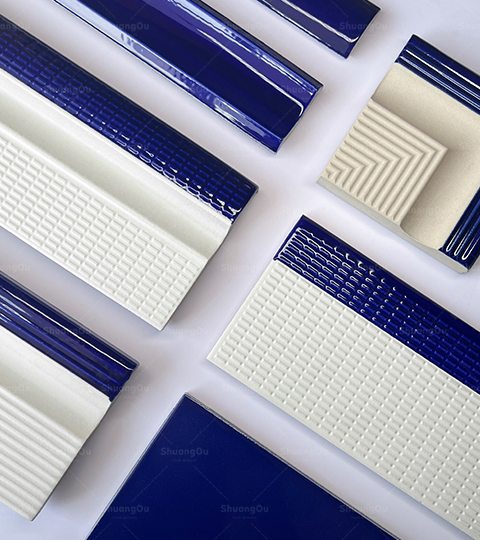
Shuangou’s anti-slip mosaic systems, for example, are designed to meet DIN 51097 Class B performance for wet barefoot areas.
Chemical Resistance
Pool tiles must resist:
- Chlorine
- Bromine
- Saltwater systems
- pH balancing agents
Failure in chemical resistance leads to:
- Surface erosion
- Color fading
- Structural weakening
ISO 10545-13 defines chemical resistance classifications for ceramic tiles used in aquatic environments.
Frost & Thermal Resistance
Outdoor pool interiors must also resist:
- Freeze-thaw cycles
- Thermal expansion stress
Low water absorption is directly linked to frost resistance, preventing cracking in cold climates.
Best Materials for Pool Interior Tiles
Porcelain Tile
Porcelain is the most widely used material for pool interiors due to its:
- Extremely low porosity (≤0.5%)
- High structural density
- Long-term chemical resistance
According to industry analysis, porcelain is fired at very high temperatures, making it significantly stronger and more durable than standard ceramic tiles.
Best applications:
- Pool floors
- Walls
- Steps
Glass Mosaic Tile
Glass mosaics are widely used for decorative pool interiors because:
- They are non-porous
- They reflect light beautifully
- They enhance water color depth
However, they require careful maintenance due to:
- More grout lines
- Higher calcium buildup risk
- Higher installation cost
Ceramic Tile
Standard residential ceramic tiles are inherently unsuitable for pool interiors. Because their water absorption rate often ranges between 1% and 3%, continuous submersion triggers moisture expansion beneath the glaze. Over time, this leads to glaze crazing, structural cracking, and eventual delamination from the concrete shell under freeze-thaw cycles. Submerged ceramic usage should be strictly limited to non-porous, specialized borders.
Natural Stone
While premium granites and basals can serve as pool interiors if meticulously sealed with hydrophobic coatings, sedimentary stones like limestone, travertine, and marble should be completely avoided. The acidic nature of pool balancing chemicals and sanitizers dissolves the calcium carbonate matrix within these stones, causing pitting, rapid erosion, and structural crumbling.
Mosaic Systems in Modern Pool Interior Design
Mosaic tile systems are one of the most popular choices for modern pool interior design.
Advantages of Mosaic Tiles
- Better grip due to grout density
- Flexibility for curved surfaces
- Easier adaptation to complex pool geometry
Engineering Benefits
Small-format mosaics distribute:
- Mechanical stress evenly
- Hydrostatic pressure more effectively across surfaces
According to pool engineering discussions, mosaics are widely used in steps and shallow zones because they improve safety through surface texture and friction distribution.
Design Considerations for Pool Interior Tiles
Color and Water Appearance
Tile color directly influences pool water perception:
- Blue → classic clean water effect
- White → bright reflective water
- Dark tones → deep lagoon effect
- Green → tropical aesthetic
Tile Size Selection
- Small tiles → better grip and flexibility
- Large tiles → modern aesthetic but higher slip risk in submerged zones
Grout Line Design
Grout plays a functional role:
- More grout = more traction but higher maintenance
- Less grout = easier cleaning but reduced slip resistance
Common Mistakes When Choosing Pool Interior Tiles
Many pool failures are caused by incorrect material selection:
- Using high-absorption ceramic tiles
- Ignoring slip resistance ratings
- Using polished surfaces in submerged areas
- Selecting oversized tiles for pool floors
- Not considering chemical exposure over time
These mistakes often result in:
- Tile detachment
- Slippery surfaces
- Surface discoloration
- High maintenance costs
Why Shuangou Tiles Are Suitable for Pool Interior Applications
According to product and technical information from Shuangou Tiles , their mosaic systems are designed specifically for swimming pool environments.
High-Density Vitrified Porcelain
Shuangou tiles are produced using high-temperature firing techniques, resulting in:
- Low water absorption (≤0.5%)
- High density and structural stability
- Long-term durability in submerged conditions
Anti-Slip Engineering
Their mosaic systems are designed to meet barefoot safety requirements, including DIN 51097 classifications for wet environments.
Chemical & UV Resistance
Shuangou pool tiles are engineered to withstand:
- Chlorinated water
- UV exposure
- Long-term outdoor use
Application Flexibility
Suitable for:
- Full pool interiors
- Waterline decoration
- Steps and benches
- Spa and wet zones
Installation Considerations for Pool Interior Tiles
Even high-quality tiles require proper installation.
Key factors include:
- Waterproof membrane system
- High-performance adhesive (C2 class or equivalent)
- Epoxy grout for chemical resistance
- Proper expansion joints
- Structural substrate preparation
Poor installation is one of the leading causes of tile failure in pools.
Maintenance of Pool Interior Tiles
Proper maintenance ensures long lifespan:
Regular Maintenance Includes:
- Brushing tile surfaces weekly
- Monitoring water chemistry (pH balance)
- Removing calcium deposits
- Inspecting grout lines annually
Glass tiles require more frequent cleaning due to visible residue buildup.
Conclusion
If you want something engineered specifically for this kind of abuse, manufacturers like Shuangou Tiles are worth looking into. Their high-density vitrified porcelain mosaic systems are built for full pool interiors, waterlines, and spas. They hit all the critical numbers—low water absorption (≤0.5%), heavy-duty chemical and UV resistance, and legitimate DIN 51097 slip resistance—so you don’t have to worry about your investment peeling off the walls in five years.