

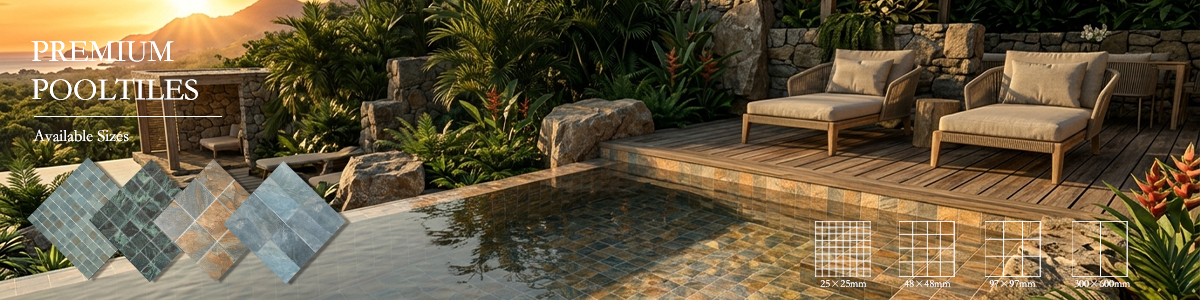
A great swimming pool needs to be more than just a beautiful centerpiece for a backyard or a hotel. Whether you are dealing with a private plunge pool, a commercial resort, a wellness spa, or a public aquatic center, safety is the one thing you can’t compromise on. Wet surfaces are a natural hazard, and choosing the wrong flooring material around a pool is a recipe for slip-and-fall accidents.
That is why anti-slip porcelain tiles have become the go-to choice for modern swim basins. They solve the classic design dilemma by packing safety, long-term durability, and low maintenance into finishes that actually look great.
Where the real slip hazards hide
Water doesn’t stay inside the pool. Splashing, wet feet, sunscreen overspray, and heavy foot traffic turn the surrounding hardscape into a hazard zone very quickly.
If you talk to any experienced pool builder or hardscape contractor, they will tell you that slip resistance is usually the first line item they check. They are looking at technical data like the coefficient of friction (COF), DCOF ratings, and specialized barefoot tests before they ever approve a tile for a pool deck or interior.
You need to pay closest attention to the transition zones where people are moving between dry and wet areas:
- Pool entry steps and shallow beach entries
- Baja shelves and tanning ledges where water sits stagnant
- Overflow coping and wet edges
- Main pool decks and walkways connecting different zones
- Spa steps and hot tub surrounds
- Children’s splash pads and water play areas
Using tiles engineered specifically for these spots keeps people on their feet and protects the property owner from liability.
Why Porcelain Tiles Are Ideal for Swim Basins
It won’t absorb water
True porcelain is defined by its density. To meet international standards, a tile must have a water absorption rate of 0.5% or lower.
For a swim basin, this near-zero porosity is a lifesaver. Because water cannot seep into the body of the tile, the material is highly resistant to cracking and structural breakdown. This is especially true in colder climates where freeze-thaw cycles can destroy more porous materials like natural stone or cheap ceramics. ShuangOu’s porcelain mosaics are fired at over 1200°C to ensure they are completely vitrified and ready for total submersion.
It shrugs off harsh chemicals
Modern pools are aggressive chemical environments. Between high chlorine levels, bromine, advanced saltwater chlorinator systems, and the acid washes used during routine maintenance, a tile surface takes a beating.
Low-grade stones or standard ceramic glazes will often etch, fade, or pit over time when exposed to these chemicals. ShuangOu’s pool-grade porcelain tiles are formulated to be chemically inert. Tested under strict ISO 10545-13 standards, our porcelain pool mosaics and anti-slip surrounds handle high-salinity saltwater systems and chemical shock treatments without losing their finish or weakening structurally.
It lasts for decades
Porcelain is incredibly hard, wear-resistant, and UV-stable. If you install it correctly using proper waterproofing membranes, specialized pool adhesives, and epoxy grouts, a porcelain pool surround can easily last for decades. For commercial projects, this long lifecycle means lower maintenance costs and fewer closed days for repairs.
Deciphering anti-slip ratings
You cannot just grab a standard outdoor tile and put it on a pool step. You need to understand the ratings to ensure it is safe for bare feet.
The DIN 51097 barefoot standard
This is the most reliable benchmark for wet areas because it tests traction on bare skin using soapy water. It breaks tiles down into three main categories:
- Class A (12°–18° angle): Best kept for dry areas like locker rooms or the very bottom of the deep end where no one is walking.
- Class B (18°–24° angle): This is the industry sweet spot. It provides enough grip for pool steps, pool surrounds, tanning ledges, and shallow zones without being too abrasive on the soles of your feet. ShuangOu’s anti-slip pool tile lines are specifically engineered to hit this Class B target.
- Class C (Over 24° angle): This is high-traction territory, necessary for steep commercial ramps, beach entries, or the specific edges where water flows constantly.
R-ratings for the outdoor pool deck
When you are moving away from the water’s edge and onto the main pool deck, designers often look at R-ratings for footwear safety. ShuangOu produces R12 anti-slip porcelain tiles that offer excellent traction for wet outdoor areas, helping prevent slips even during heavy rain or pool parties.
Crucial spots for anti-slip tile
Pool steps and Baja shelves
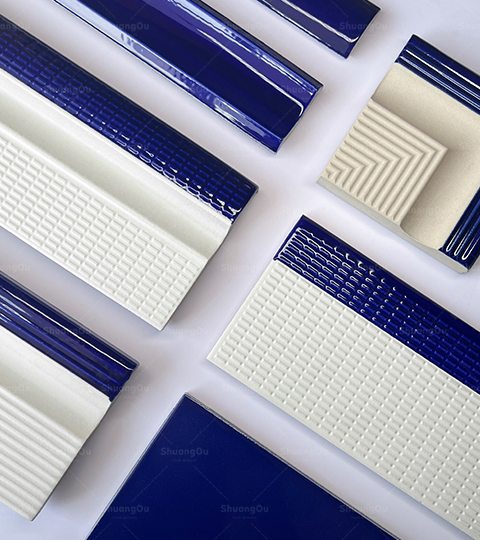
Most pool accidents happen where people enter or exit the water. Steps are notoriously slick, so using textured porcelain mosaics on the treads and risers gives swimmers a solid foothold.
Baja shelves and tanning ledges have their own unique problems. Because they only sit in a few inches of water, they get warm fast. This warmth, combined with sunlight and sunscreen residue, creates a perfect breeding ground for an invisible, slippery biofilm.
We highly recommend using vitrified porcelain mosaics for these shallow zones. The sheer number of grout lines in a mosaic layout breaks up the water film mechanically, giving you extra traction that works alongside the tile’s built-in texture. Plus, our porcelain is completely UV-stable, so it won’t yellow or degrade under constant sun exposure.
Pool decks and spas
The pool deck takes the brunt of the traffic, so it requires verified slip-resistance ratings to handle constant splashing. Spas and wellness centers are even more demanding because the combination of hot water, high humidity, and body oils keeps surfaces slick for hours. Using properly rated porcelain around jacuzzis and hydrotherapy pools keeps guests moving safely.
Safety doesn’t have to look boring
A common misconception is that anti-slip tiles have to look institutional. Thanks to modern digital printing and manufacturing, you can get high-performance safety tiles that mimic luxury materials.
- Natural stone looks: You can achieve the look of travertine, limestone, granite, or sandstone without the sealing, staining, and erosion issues of real stone.
- Wood-look planks: Get the warmth and texture of a timber deck right up to the water line. Wood-look porcelain won’t splinter, rot, or fade in the sun. ShuangOu offers R12 wood-look options made specifically for pool surrounds.
- Classic pool mosaics: Mosaics offer incredible design flexibility around curved pool shapes and steps. The grout joints naturally increase grip, and our collections include deep blues, greens, Carrara marble styles, and custom patterns.
Technical Factors to Consider When Choosing Swim Basin Tiles
Water Absorption
Look for porcelain tiles meeting:
- ISO 13006 requirements
- Water absorption ≤ 0.5%
Lower absorption generally means better long-term performance in submerged environments.
Chemical Resistance
Verify compliance with:
- ISO 10545-13
This testing evaluates resistance to pool chemicals and cleaning agents.
Frost Resistance
Outdoor swim basins in colder climates require frost-resistant materials.
Freeze-thaw cycles can damage porous materials, while vitrified porcelain provides improved protection against cracking.
UV Stability
Pool tiles are constantly exposed to sunlight.
UV-resistant porcelain helps preserve:
- Color consistency
- Surface appearance
- Long-term aesthetics
ShuangOu identifies UV resistance as a key performance characteristic of its porcelain pool products.
Avoiding common design traps
The most common mistake is picking a tile based entirely on a photo or a dry sample. A tile that feels fine in a showroom can turn into ice as soon as it meets water and sunscreen. Always verify the slip certifications and make sure you aren’t using standard indoor tile for an outdoor pool environment—indoor products simply can’t handle the UV exposure and frost cycles.
Finally, remember that the tile is only as good as the installation underneath it. Specifying the right waterproofing systems, flexible adhesives, and pool-rated grouts is just as critical as picking the tile itself.
Why Many Pool Professionals Choose Porcelain Mosaics
Porcelain mosaics continue to dominate high-end swim basin construction because they offer a strong combination of:
- Safety
- Durability
- Design flexibility
- Chemical resistance
- Low maintenance
Industry discussions consistently highlight porcelain as one of the most reliable materials for swimming pools when properly rated for submerged applications.
Additionally, the numerous grout joints created by mosaic formats can contribute to improved traction in wet environments, making mosaics particularly popular for pool floors, steps, and curved surfaces.
How ShuangOu helps
With decades of experience in specialized swimming pool tile manufacturing, ShuangOu provides direct support for architects, builders, and pool contractors worldwide. Whether you need FINA-compliant commercial specifications, custom porcelain pool mosaics, or high-traction R12 poolside finishes, we supply durable solutions to over 100 countries.
Choosing a properly engineered anti-slip porcelain tile system ensures your swim basin remains safe, functional, and beautiful for years to come.
Conclusion
Creating a safe swim basin starts with choosing materials engineered for wet environments. Anti-slip porcelain tiles provide the ideal combination of safety, durability, low water absorption, chemical resistance, and visual appeal.
For architects, pool builders, and property owners seeking reliable swimming pool finishes, ShuangOu’s range of anti-slip porcelain tiles and pool mosaics offers a practical solution that balances safety, aesthetics, and durability for modern swim basin projects.


