
The success of a restaurant may depend on its products. But the growth of a chain brand requires more. When a store grows from 1 location to 10 or even 50, how can the space remain consistent without losing its brand quality? This has become an increasingly important issue for restaurant brands in spatial design. WENTONG’S on Beijing Road in Guangzhou is a real-world implementation case. This project was jointly developed by Shuangou and WENTONG’S. From material selection and spatial effects to final implementation, Shuangou limestone handmade tiles became an important visual language throughout the store. After the first store was completed, the WENTONG’S team highlyapproved of the final result and continued using Shuangou materials in subsequent chain locations. This was not simply a one-off project collaboration, but proof that a spatial material solution had been validated by the brand and could be replicated continuously.
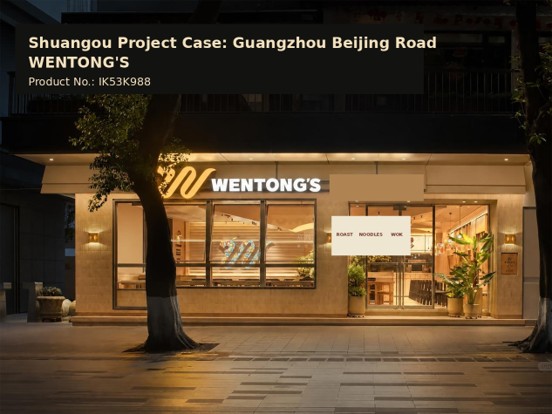
Chain Restaurants Are Entering the Era of “Spatial Standardization”
In the past, restaurant brands focused more on whether: The menu was consistent; The service was consistent; Operations were consistent. But today, more and more brands are realizing that: Space itself is also a brand asset. When consumers enter a store, the first thing they experience is not written information, but: The storefront image; The wall materials; The atmosphere under the lighting; The brand character conveyed by the space. So for chain brands, the value of design is not only to create one attractive store, but to establish a spatial system that can be replicated continuously.
Why Did WENTONG’S Choose Limestone Handmade Tiles?
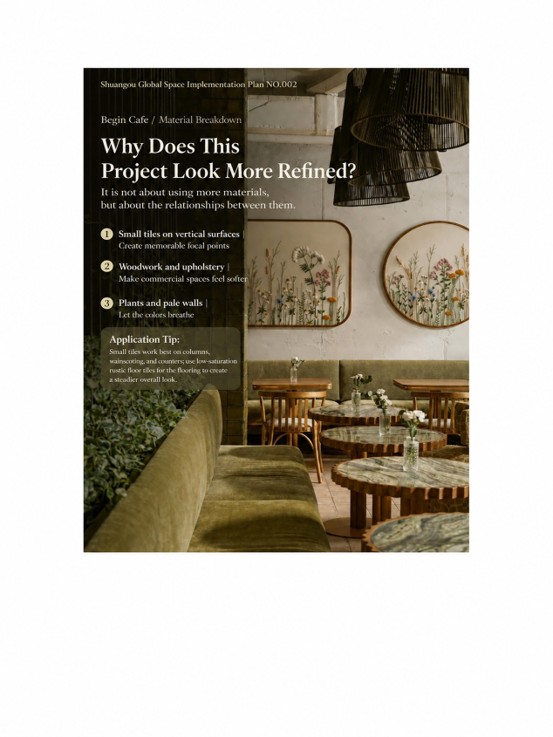
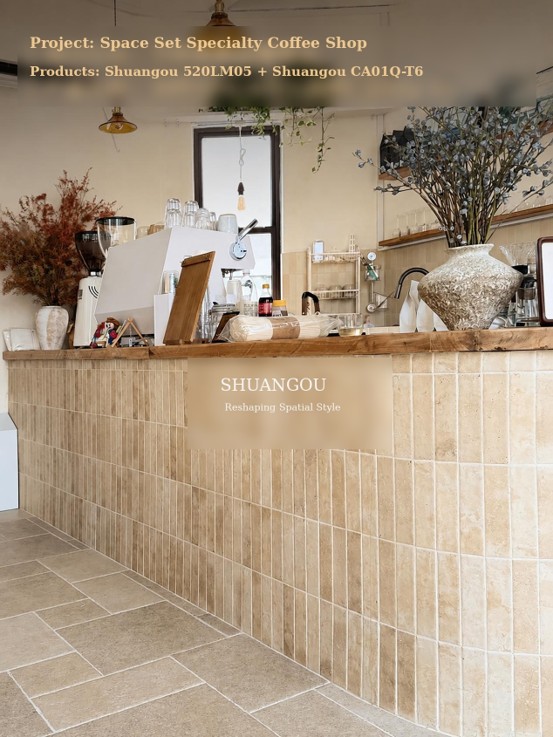
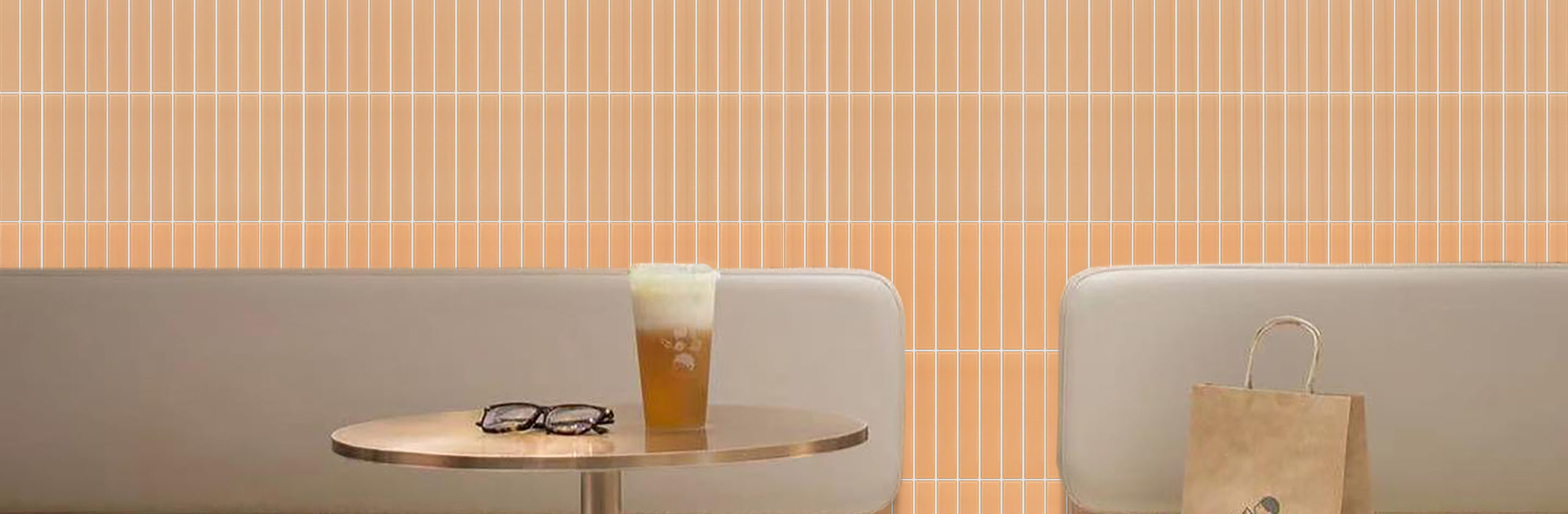
In this project, Shuangou limestone handmade tiles were used on the store facade and interior walls. Compared with traditional small-format tiles, the long-strip proportion creates a more expansive visual effect. It reduces the fragmented feel of the wall surface, giving the space a more continuous and integrated architectural expression. At the same time, the natural, soft limestone texture, paired with warm lighting, creates a low-saturation, natural, and enduring spatial atmosphere. This material language closely aligns with current trends in commercial-space design: not chasing short-lived visual impact, but creating a spatial experience that people are willing to stay in over time.
Long-Format Materials Are Becoming a New Trend in Commercial Spaces
In recent years, from boutique cafés and select stores to high-end dining spaces, more and more designs have returned to natural textures. The reason is simple: Consumers’ expectations of space are changing. They want to see: More authentic materials; More refined tactile qualities; More comfortable environments. The strength of limestone handmade tiles is that they offer all of the following:
Spatial extension
The elongated proportion makes wall surfaces feel more complete, making it especially suitable for commercial facades, feature walls, and large-area applications.
Material expressiveness
Natural stone-like textures give the space richer layers.
Chain replication capability
A consistent material language helps brands maintain visual continuity across different locations.
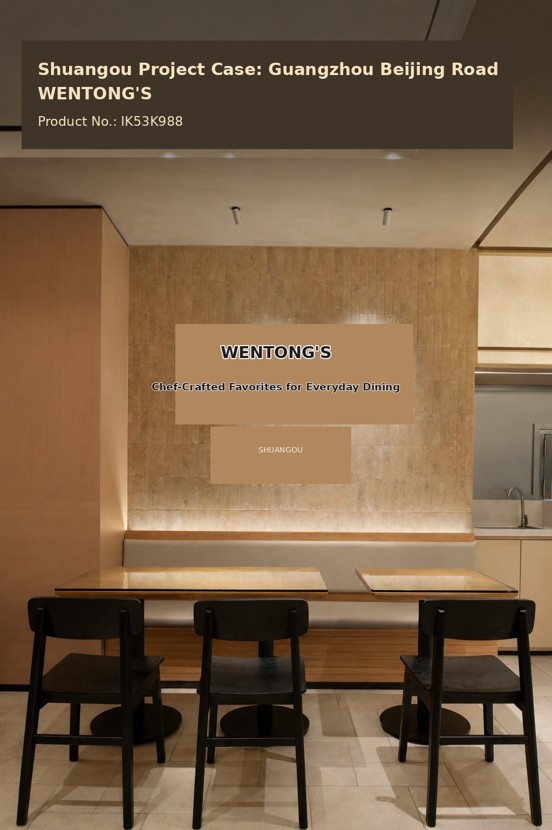
From One Store to Multiple Chain Locations: A Good Material Solution Must Stand Up to Real-World Implementation
Many commercial designs remain only at the rendering stage. But what truly determines the value of a space is how it performs after completion. In the WENTONG’S project, Shuangou did more than simply supply products, paying close attention to how materials interact with the space. From the overall color palette: A warm and natural spatial foundation; To the relationships among materials: The pairing of limestone walls with wood, lighting, and furniture; the final result is a commercial space that aligns with the brand positioning. After the first store was completed, the actual result was highly recognized by the WENTONG’S team, and subsequent chain locations continued to use Shuangou materials. This shows that: A truly valuable material solution does more than complete a single design, it helps a brand build a stable, long-term spatial identity.
Shuangou: From Material Supplier to Spatial Solution Partner
Behind the WENTONG’S case is a direction that reflects the future of commercial spaces: Materials are no longer just one option in decoration, but an important part of brand expression. Shuangou has always focused on: The relationship between materials and space. From global commercial-space trends, to material-pairing solutions for different scenarios, helping designers and brands discover more possibilities for spatial expression, and turning design into reality. From one store, to a complete standard for a chain of spaces. Good materials are becoming part of brand memory. Shuangou does more than supply materials – it studies how materials create space.