
Breaking Down the Material Coordination Logic for Bakeries, Coffee Shops, and Restaurant Spaces
In recent years, commercial space design has been changing. From the visually intense “Instagrammable style” of the past to today’s more experience-oriented “mood-driven design,” Low Saturation Retro Style is becoming a key trend in commercial space design for 2026. Especially in: Boutique bakery fit-outs, Coffee shop space design, Retro restaurant design, French dining spaces, High-end commercial space design. Designers are increasingly inclined to use natural materials, low-saturation colors, and materials with a sense of time to create spaces that invite people to stay and be remembered over the long term. Shuangou Spatial Research believes: The core of future commercial spaces is not only to meet functional needs, but also to create brand experience through materials.
Why Has Low-Saturation Retro Space Become a Commercial Design Trend?
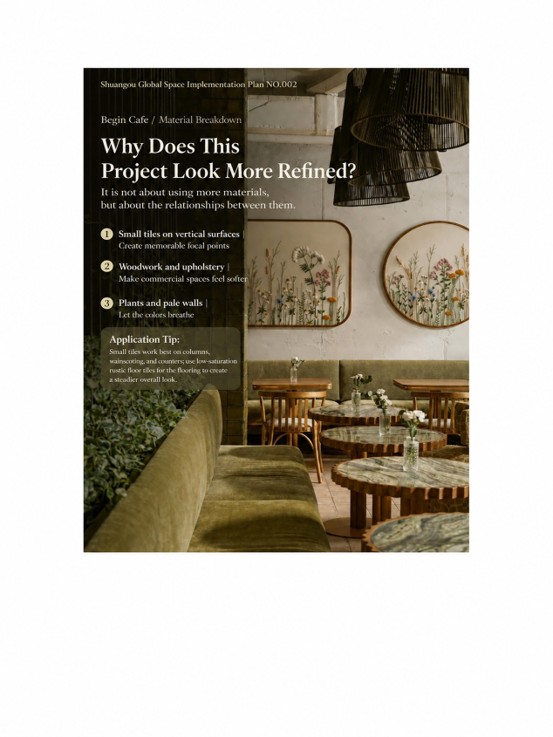
Low-saturation retro style is not simply a reproduction of old-era decoration. It is closer to a form of “modern retro design.” Through: Warm wood, Off-white wall tiles, Natural stone flooring, Handmade tile texture, Warm lighting, Retro soft furnishings and merchandising. It recreates a natural, relaxed, and story-filled spatial atmosphere. Compared with the instant visual stimulation brought by high-saturation colors, low-saturation spaces better match today’s consumers’ desire for: “comfort,” “relaxation,” and “spaces where they want to linger.” As a result, more and more coffee shops, bakeries, and restaurants are adopting this design direction.
For Low-Saturation Retro Bakery Design, the Key Lies in Material Pairing
A refined retro bakery space is not created by piling on decoration. What truly determines the texture and quality of the space is the relationship between materials.
Wood Cabinetry: Creating Warmth in a Retro Space
Bakeries often use warm-toned woods such as dark walnut and oak. Wood display cabinets are used not only to present bread products, but also to serve as the visual center of the space. The natural grain and sense of age in wood can give the space an atmosphere similar to that of an old European bakery. However, too much wood can easily make the space feel heavy. Therefore, it needs to be paired with light-colored wall materials to keep the space balanced.
Off-White Handmade Tiles: Creating Delicate Layers on Retro Walls
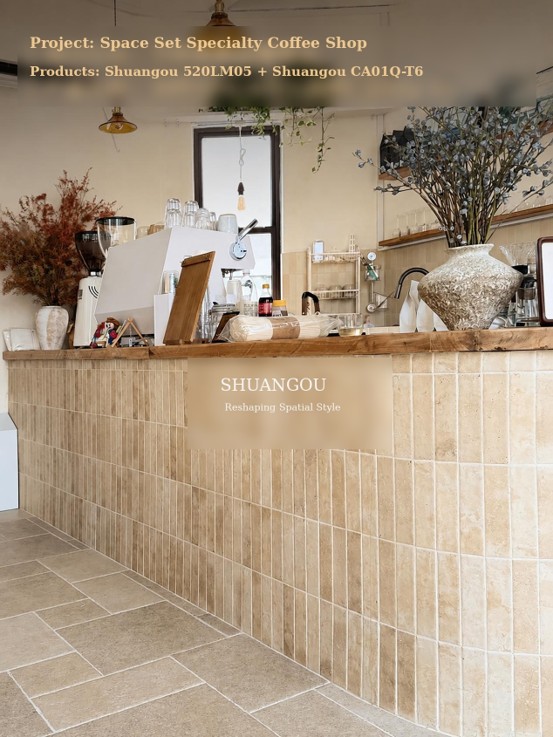
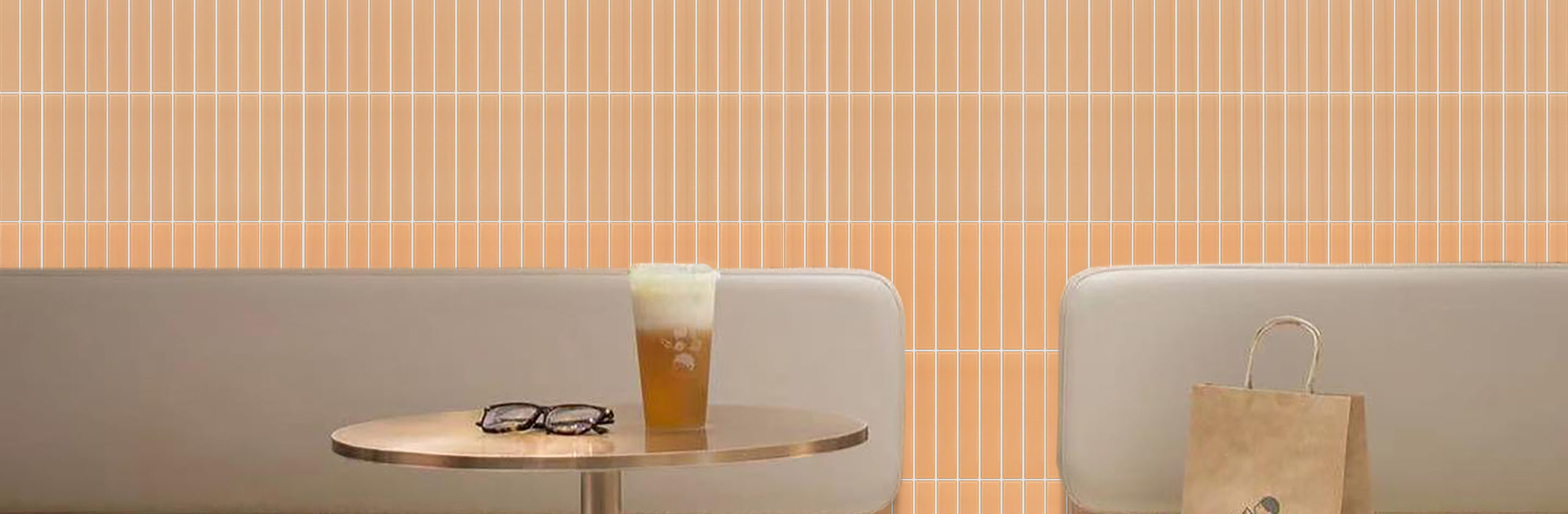
In low-saturation commercial spaces, wall materials are receiving increasing attention from designers. Compared with ordinary latex paint: Handmade tiles and stone-texture tiles can, through: Delicate texture, Natural color variation, Changes in light and shadow, add layers to the space. For example, Shuangou’s Mid-Century Limestone Series combines off-white, warm gray, and other low-saturation tones with natural stone texture, making it suitable for: Bakery feature walls, Coffee shop counters, Restaurant walls, Accent decoration in commercial spaces, turning the wall into part of the spatial design itself.
Aged Castle-Style Tiles with a Stone Feel: Creating Natural Retro Flooring
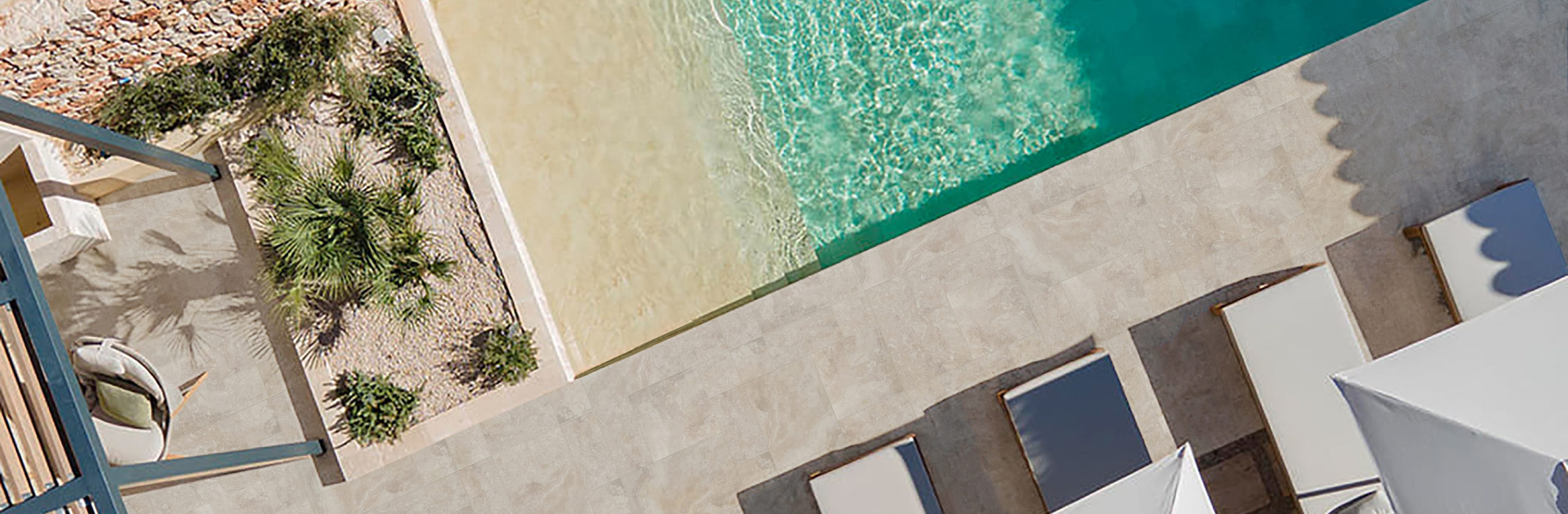
For retro commercial spaces, the floor needs to do more than just resist wear. More importantly: it needs to form an emotional connection with the overall space. Compared with traditional large expanses of plain floor tiles, natural stone textures and castle-style tile laying can give the floor: A sense of time-worn character, A sense of natural variation, A handcrafted laid-in-place feeling, Shuangou’s Aged Castle Series uses mixed sizes and combination laying to create a natural texture similar to that found in old European buildings. Suitable for: Retro restaurants, Boutique coffee shops, Hospitality dining spaces, High-end commercial spaces.
2026 Restaurant Space Trend: From “Decoration” to “Experience Design”
Future restaurant design is not only about solving dining functionality. Consumers’ choice of a restaurant is increasingly influenced by the atmosphere of the space. Therefore, three major trends are emerging in commercial spaces:
Trend 1: Natural Materials Replacing Excessive Decoration
High-end spaces of the future will reduce complex forms. Instead, they will rely more on: Real materials such as stone, wood, handmade tiles, terracotta, and metal to express spatial quality. The materials themselves become the design language.
Trend 2: Low-Saturation Colors Becoming the Source of Refined Commercial Space Quality
2026 trending colors for commercial spaces: Off-white, Sand, Light coffee brown, Olive green, Terracotta, Deep wood tones, These colors do not create strong stimulation, but they can form a stable, enduring spatial character.
Trend 3: Commercial Spaces Are Placing Greater Emphasis on Brand Memory
An excellent restaurant design is not only visually appealing. It also enables consumers to remember, even after they leave: The texture of the walls; The way the tile surface changes under the lighting; The color relationships within the space. Materials become an important part of the brand experience.
Shuangou’s Material Pairing Philosophy for Commercial Spaces
Shuangou has always focused on more than simply supplying building materials such as tiles, mosaics, and handmade tiles. More importantly: studying the relationship between materials and space. From global commercial space design trends to: Material pairings for bakery fit-outs, Wall and floor tile coordination for coffee shops, Restaurant space design solutions, Real implementation cases for commercial spaces.
Shuangou hopes to help designers find more possibilities for spatial expression. Because the true value of design is not completed in renderings. It is realized after the materials are implemented, when it becomes a spatial experience that consumers can truly feel. Future commercial spaces will no longer chase short-lived traffic. Truly valuable spaces will use materials, color, light and shadow, and display to create an emotional connection with consumers. And low-saturation retro style is becoming a design language through which commercial spaces can rebuild a sense of memory.