
Choosing pool tile designs isn’t just about matching your outdoor furniture. If you don’t account for the actual shape of your pool, you are setting yourself up for a nightmare of cracked grout, jagged edges, and tiles that pop off the wall in a few seasons. A straight-lined lap pool requires an entirely different installation approach than a winding, lagoon-inspired freeform pool.
Beyond aesthetics, the tech specs matter. Any tile you submerge underwater needs to handle constant exposure to chlorine, bromine, and random pH spikes. That means sticking to international benchmarks like an absorption rate of 0.5% (ISO 10545-3) for vitrified porcelain or glass, and certified chemical resistance (ISO 10545-13).
How pool shapes dictate your tile choices
The geometry of your pool determines how your installer handles cuts, seams, and waste.
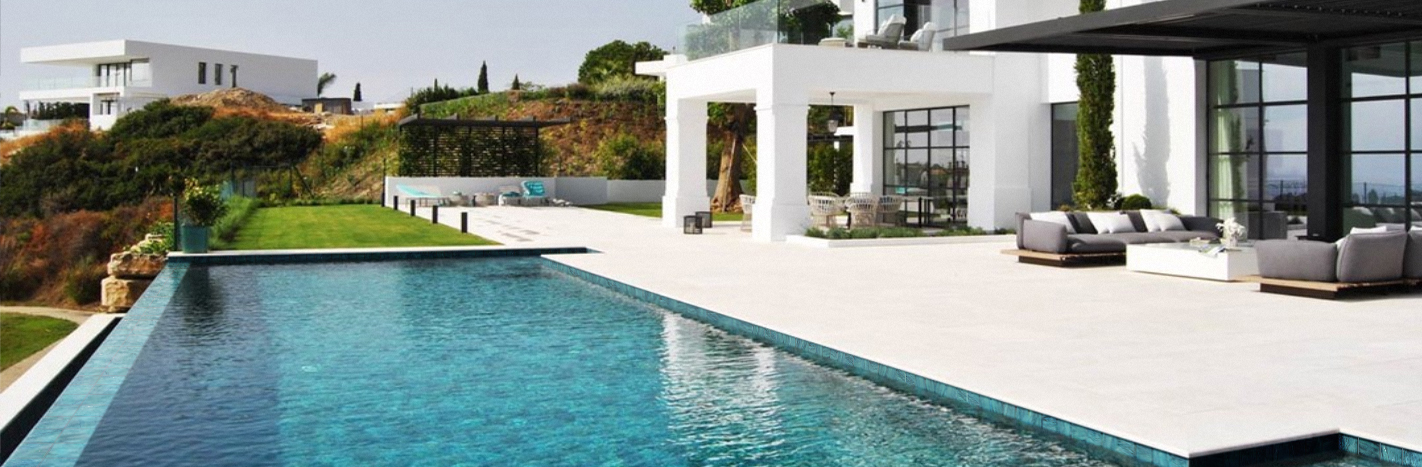
Rectangular pools are incredibly popular for a reason—they are clean, classic, and perfect for swimming laps. Because the walls are perfectly flat, you can use larger tiles, which means fewer grout lines to scrub later. The catch? Geometric precision leaves zero room for error. If your waterline tile is even two millimeters out of alignment, it will look crooked from across the yard.
Oval and circular pools soften those harsh angles, but they introduce continuous curves. You cannot slap a large, rigid tile onto a curved wall without creating huge, ugly gaps at the joints. These shapes require medium-sized, flexible tile options that can follow an arc without requiring a mountain of wasted, cut pieces.
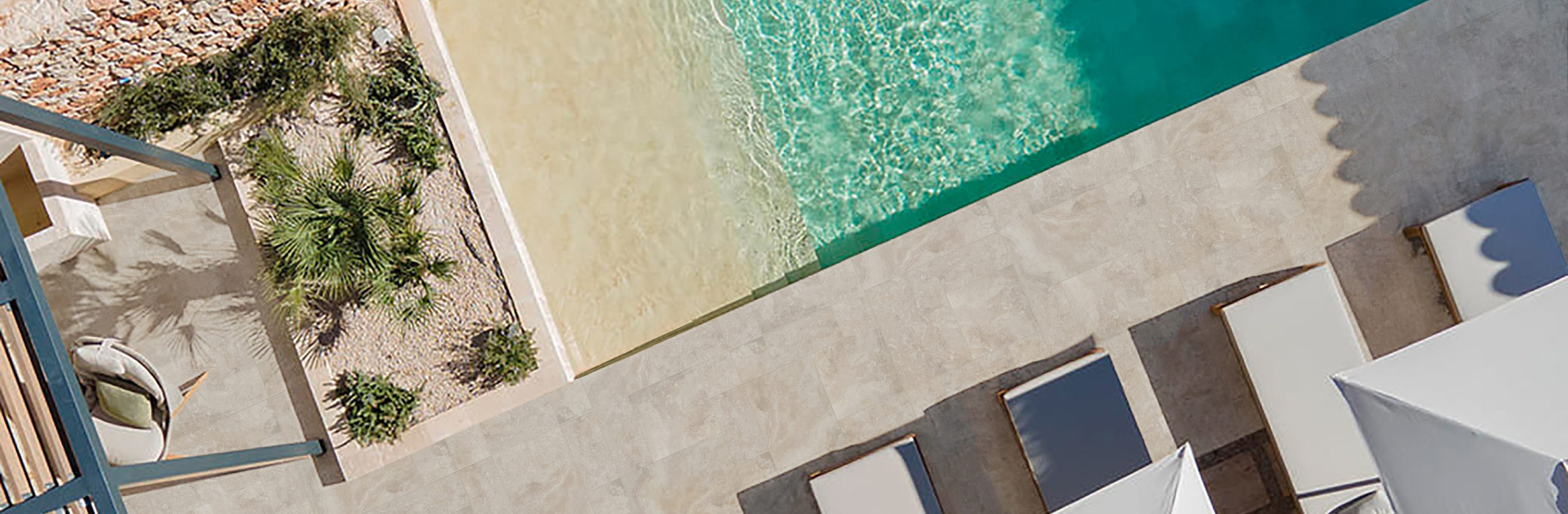
Freeform pools are a completely different beast. They feature irregular, organic curves designed to mimic natural ponds. If you try to use standard field tiles here, you will end up with severe lippage—where the edges of adjacent tiles stick out and create a sharp, uneven surface. Small-format mosaics are non-negotiable for freeform designs because they mold seamlessly to tight contours.
L-shaped and custom pools give you the best of both worlds. They usually feature a long, straight swimming section connected to a separate shallow area or spa. This layout is perfect for zoning your pool tile designs—you can use large, low-maintenance tiles in the main swimming arm, and switch to vibrant mosaics to highlight the relaxation zones.
Recommended Pool Tile Designs by Pool Shape
Rectangular Pools
Ideal for minimalist, geometric aesthetics and lap swimming. While residential geometric pools can utilize true large-format tiles to minimize grout lines, competitive and high-traffic commercial layouts rely on standard 240x115mm extruded porcelain tiles (the classic FINA standard). These precise dimensions allow for calculated 6mm to 8mm grout joints, which are essential for accommodating thermal expansion and hydro-structural movement. When planning pool tile designs for straight-line configurations, choosing tiles with a calibrated edge ensures flawless alignment along the waterline and racing lanes.
Popular pool tile designs for rectangular pools include:
- Subtle geometric patterns or linear accents along the waterline.
- Solid color fields in calming blues or grays for a minimalist look.
- Iridescent or pearlescent mosaics on feature walls to add light reflection.
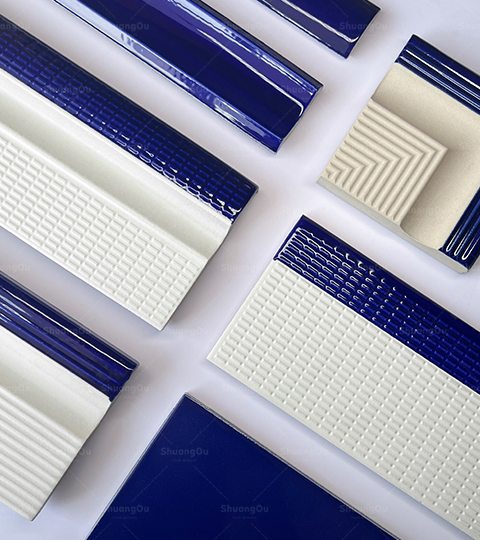
ShuangOu Tiles offers porcelain mosaics and standard pool tiles suitable for such applications, including options with low water absorption and anti-slip properties. Their accessory tiles, such as bullnose edges, provide clean finishes on steps and coping common in rectangular layouts. The company’s R12 porcelain wood-look tiles can be used on surrounding decks for coordinated safety and aesthetics.
In competition or high-use rectangular pools, FINA-compliant tiles ensure dimensional accuracy and durability under heavy traffic. ShuangOu provides solutions in this category, supporting consistent performance in Olympic-style settings.
Oval and Circular Pools
The gentle curves of oval and circular pools require pool tile designs with moderate flexibility. Medium-sized mesh-backed mosaics (for example, sheets covering 300x300mm areas) allow installers to follow the arc without excessive cutting, preserving the intended symmetry.
Design recommendations often center on radial patterns or soft color gradients that radiate from the center or follow the perimeter. Soft blue-to-green transitions can evoke a sense of calm and natural depth. Iridescent tiles enhance the play of light on the water surface, which is particularly noticeable in rounded forms where light reflects uniformly.
ShuangOu’s crystal glass and porcelain mosaic collections provide options with high shade variation and flexibility for curved installations. These products are engineered for color stability under prolonged chemical and UV exposure, important for pools where water movement differs from linear designs. Their pre-mesh backed sheets facilitate faster installation on rounded surfaces.
Freeform Pools
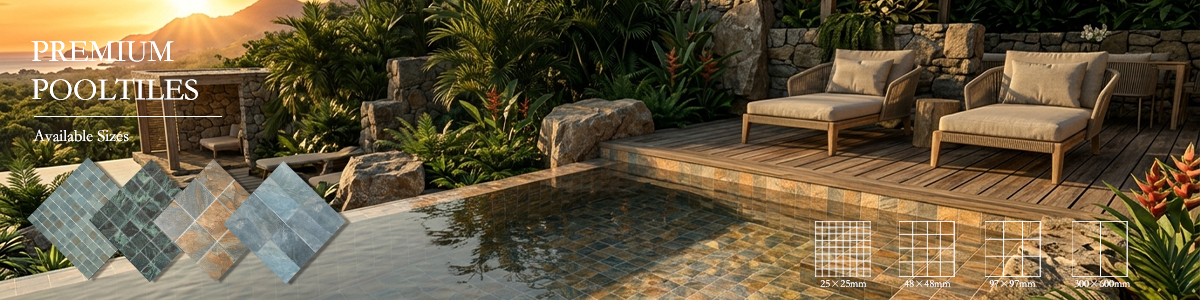
Freeform pools, with their dramatic curves and irregular outlines, present the greatest challenge and creative potential for pool tile designs. Small-format mosaics, such as 23x23mm or 48x48mm chips on mesh sheets, are essential. They conform closely to organic shapes, reducing the risk of lippage, cracking, or visible discontinuities in the grout lines.
Effective designs for freeform pools often imitate natural elements:
- High-variation stone textures or lagoon-inspired blends of greens and blues.
- Organic patterns that soften edges and integrate with garden or rock features.
- Textured surfaces on benches and tanning ledges for added grip and visual interest.
ShuangOu Tiles specializes in nature-inspired series ideal for freeform applications. The Bali Green collection, inspired by seawater reflecting hills under sunlight, delivers a tropical resort feel with vitrified porcelain durability. The Moissanite series evokes lush Southeast Asian forests with tropical green tones. These mosaics on pre-mesh backing are well-suited for wrapping around complex curves, steps, and custom features.
Their Glacier series brings cool, modern blue tones from icy rock inspirations, while Carrara offers classic white marble looks. All emphasize low porosity to resist staining and delamination in irregular installations.
L-Shaped and Custom Pools
L-shaped pools allow for zoned pool tile designs. Larger format tiles can be used in the main rectangular swimming arm for efficiency and fewer joints, while smaller mosaics suit curved spa or ledge areas. This approach enables contrasting or complementary aesthetics—neutral tones in high-traffic zones and vibrant accents in relaxation areas.
ShuangOu supports such projects through customizable porcelain solutions and accessory tiles, including bullnose and corner pieces that ensure safe, finished edges across different zones.
| Pool Shape | Recommended Tile Formats | Key Design Features | ShuangOu Relevant Offerings | Installation Considerations |
|---|---|---|---|---|
| Rectangular | Larger | Gradients, linear patterns, waterline accents | Standard pool tiles, Morocco-inspired, anti-slip | Minimal cuts, efficient layout |
| Oval/Circular | Medium mesh-backed mosaics | Radial/ concentric patterns, soft transitions | Crystal glass mosaics, high-variation series | Moderate flexibility needed |
| Freeform | Small mosaics (23x23mm, 48x48mm) | Organic textures, natural blends | Bali Green, Moissanite, Glacier, pre-mesh | High conformability, more labor |
| L-Shaped/Custom | Mixed sizes | Zoned designs, contrasts | Custom solutions, bullnose accessories | Area-specific planning |
Key Factors to Consider When Choosing Pool Tile Designs
Selecting pool tile designs involves more than aesthetics. Several technical and practical factors ensure long-term success.
Tile Size and Installation Efficiency: Smaller tiles offer superior flexibility for curves but increase grout lines, which require more maintenance. Larger tiles reduce joints on straight surfaces, improving hygiene and ease of cleaning. Mesh-backed sheets from manufacturers like ShuangOu accelerate installation. Proper substrate preparation and movement joints are critical to prevent cracking.
Materials and Performance: Porcelain tiles generally provide lower water absorption (ideally ≤0.5%) compared to standard ceramic, enhancing resistance to pool chemicals and freeze-thaw cycles. Glass mosaics add sparkle through light refraction but may need specific adhesives. ShuangOu focuses on vitrified porcelain mosaics for durability.
Colors, Textures, and Visual Impact: Light-colored pool tile designs make water appear clearer and the pool larger. Darker tones create depth and luxury but can show more debris. Textures improve slip resistance. ShuangOu series like Bali Green and Glacier use nature-derived palettes for harmonious integration.
Safety Standards: Anti-slip ratings (such as R12 or DIN 51097 Class B/C) are vital for decks, steps, and ramps. ShuangOu offers R12 porcelain wood-look tiles and specialized anti-slip solutions for pool surrounds.
Maintenance and Sustainability: Low-porosity tiles resist staining and algae. Epoxy grouts provide better mold resistance than cement-based options. Choosing durable products reduces replacement frequency and environmental impact.
Budget and 2025-2026 Trends: Current trends emphasize quiet luxury, natural authenticity, and privacy-focused designs inspired by environments rather than ostentatious effects. ShuangOu’s collections align with this shift toward natural inspirations. Costs vary by format and customization, with mosaics typically higher than standard field tiles.
Additional considerations include compatibility with pool liners (if any), local climate (frost resistance), and compliance with standards like ISO 10545 for quality.
Working with Experts Like ShuangOu Tiles
Collaborating with an experienced manufacturer streamlines the selection process. ShuangOu provides one-stop services including design consultation, sample provision, and quality-controlled production. With three factories and a focus on both large-scale and smaller orders, they serve international clients. Resources such as qualification manuals and FINA standard documentation are available for download on their website.
Contractors and homeowners are encouraged to review catalogs, request samples of specific series, and consult on project specifications to ensure the chosen pool tile designs meet exact requirements.
Conclusion
Choosing pool tile designs based on pool shape is fundamental to achieving a harmonious, safe, and enduring swimming pool. Rectangular pools thrive with structured, efficient layouts; oval and circular designs favor flowing patterns; freeform shapes require adaptable small mosaics; and custom configurations open doors to creative zoning.
By carefully evaluating size, material, color, safety, and manufacturer capabilities, you can select pool tile designs that elevate your outdoor space. ShuangOu Tiles, with its fifteen-plus years of expertise, nature-inspired collections, and commitment to quality standards, offers reliable solutions for diverse pool projects worldwide.
FAQs
What pool tile designs work best for freeform pools?
Small-format porcelain mosaics (typically 23x23mm or similar) on mesh sheets are ideal for conforming to irregular curves while maintaining durability.
Are larger tiles suitable for rectangular pools?
Yes, larger formats reduce grout lines, simplify cleaning, and create modern aesthetics, provided they meet slip and chemical resistance standards.
What colors are trending for pool tile designs?
Natural-inspired blues, greens, and neutrals that promote calm and blend with landscapes.