
When a pool is set among Tibet’s snowy mountains, forests, and clouds, it is no longer merely a functional space for swimming — it becomes a vital medium connecting architecture, nature, and lifestyle. The outdoor pool at this Tibetan mountain lodge does not replicate the intense blue commonly seen in traditional resort hotels, nor does it rely on complex forms to create visual impact. Instead, it embraces a more restrained, more natural expression: turquoise-green water blending into the mountain landscape, with subtle material layers responding to the sky, vegetation, and distant peaks. Shuangou Ceramics has long focused on the relationship between materials and water spaces. We believe that truly vibrant pool design is not simply about choosing a “good-looking pool tile,” but about allowing materials, light, water color, architecture, and environment to come together and form a complete spatial experience. This is also the direction Shuangou has always pursued: not merely supplying pool materials, but studying how materials shape water spaces.
The Pool Is No Longer a Landscape Accessory — It Is the Heart of the Lodge Experience
For mountain lodges, the meaning of a pool has evolved. In the past, a pool was essentially a lodging amenity; today, it has gradually become one of the most shareable spatial moments for any guesthouse. Guests come here to gaze at the mountains, watch the clouds, bask in the sun, and enjoy afternoon tea — while also sharing this waterscape with a wider audience through photos and videos. Lodge pool design can no longer just answer the question of “does it exist?” It must also consider: Does this pool represent the character of the project? Can it connect with the local natural environment? Can it create a visual tableau that guests will remember and want to share?
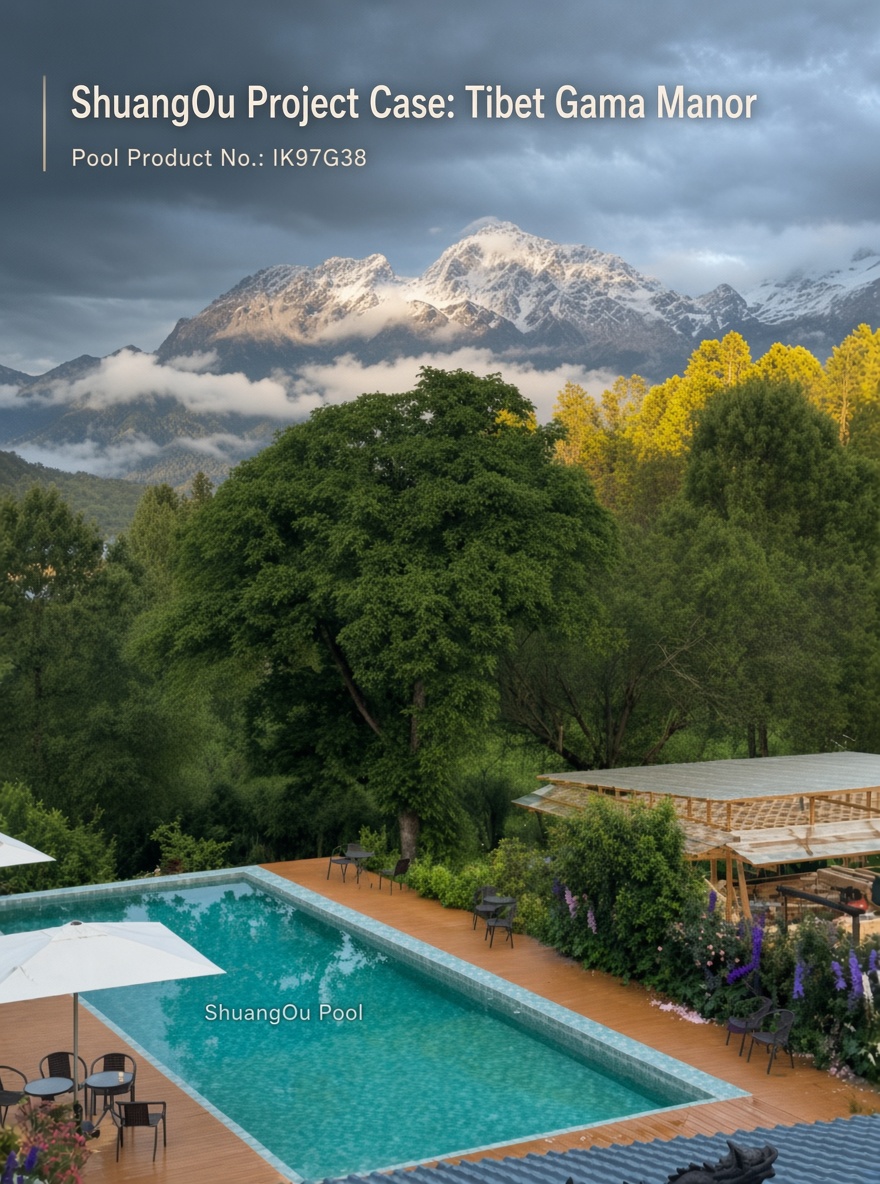
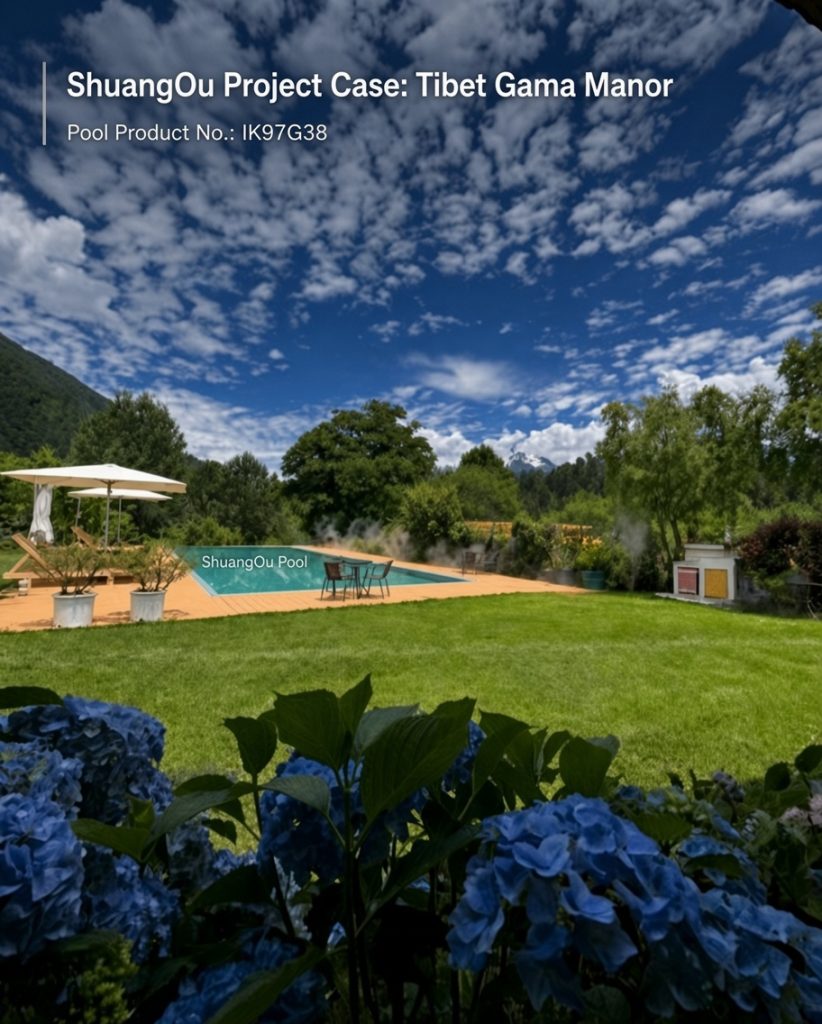
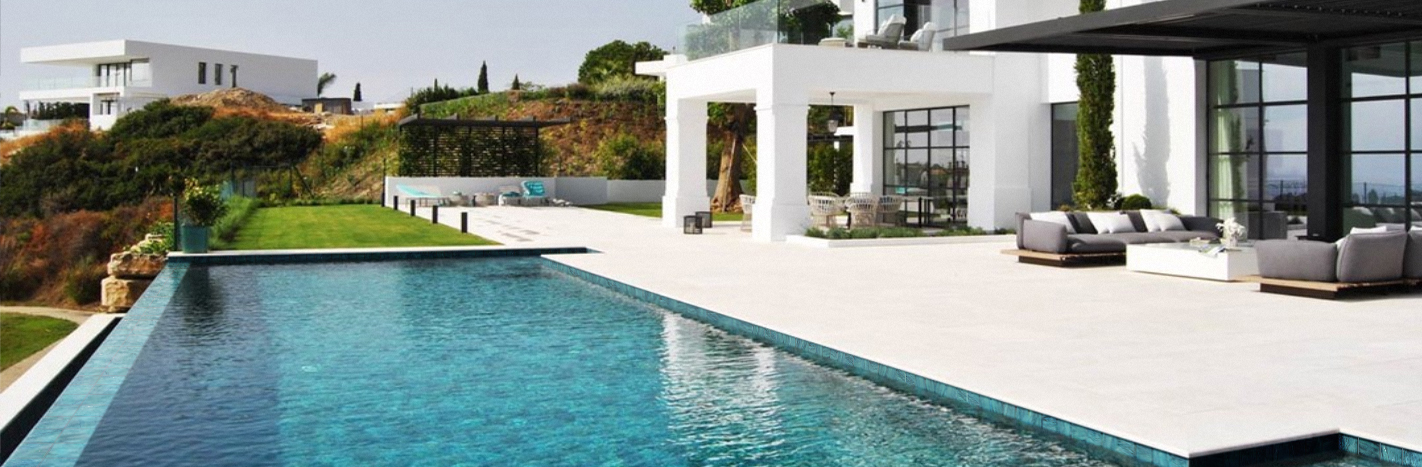
The answer offered by this Tibetan lodge is to let the pool actively blend into the mountain forest. The clean rectangular pool body downplays decorative flourishes; the clear boundary establishes spatial order; the turquoise-green water surface and surrounding vegetation complement one another. The distant forest, snowy peaks, and clouds enter the space through reflections on the water. The pool does not compete with nature for attention — it becomes part of the natural landscape. Shuangou Ceramics, in its water-space material research, has always emphasized one principle: pool materials are not isolated surface decoration, but a transitional language between architecture and nature. Only when the color, format, and texture of the materials truly match the surrounding environment does the pool avoid feeling out of place — and instead becomes the most distinctive spatial landmark of the entire project.
Why Mountain Lodges Increasingly Favor Turquoise Green Pool Tiles
Traditional pools often use highly saturated blue pool tiles, emphasizing coolness, brightness, and an artificial feel. But in boutique lodges, forest hotels, and nature retreats, designers are gradually moving away from pure blue pool tiles and turning instead to turquoise green, gray-green, blue-green, and mineral green pool tiles — colors closer to natural lakes. The jade-like turquoise green of this pool forms a natural echo with the Tibetan mountain and forest environment. On sunny days, the water appears bright and transparent; on overcast or misty days, it shifts to a deeper forest green. The color continuously changes with light, water depth, and weather, giving the pool rich, dynamic layers. The sophistication of this water color lies in the fact that it is never fixed. It absorbs the blue of the sky, the green of the plants, the gray of the clouds, and the gold of the sunlight — creating a water-space expression with genuine regional character.
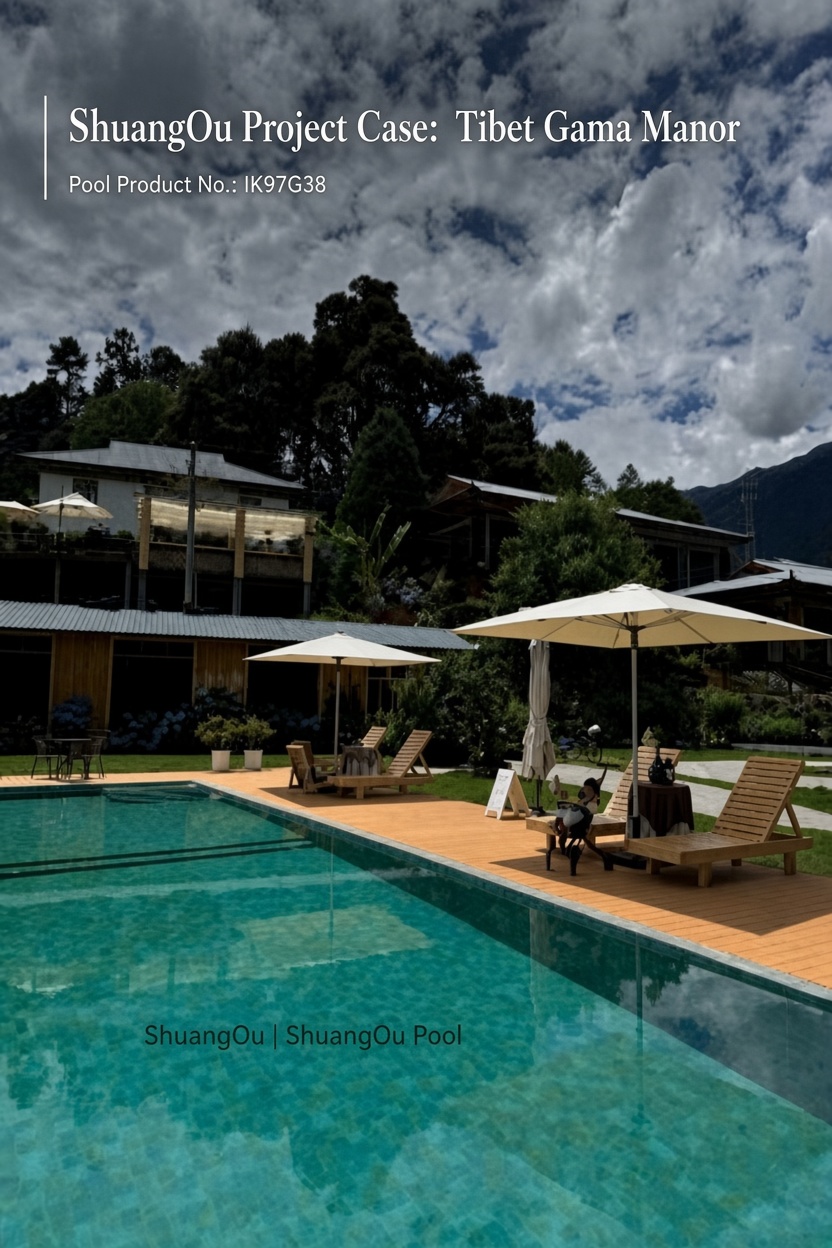
In Shuangou’s pool tile development and selection recommendations, we do not simply look at the color of the tile itself. We focus more on how the pool tile performs once underwater, including: color differences between shallow and deep areas; changes under direct sunlight versus shade; texture layering after water refraction; overall coordination of pool floor, wall, and edge pool tiles; and the relationship between water color and architecture, plants, and surrounding paving. Because the real effect of a pool tile is not the single color on a display board — it is the comprehensive result of the material entering water, light, and space. This is precisely what sets Shuangou apart from being a mere material supplier: what we study is not a single tile, but the final spatial effect of an entire pool of water.
Why Do Small-Format Pool Tiles Remain an Important Choice for Natural Pools?
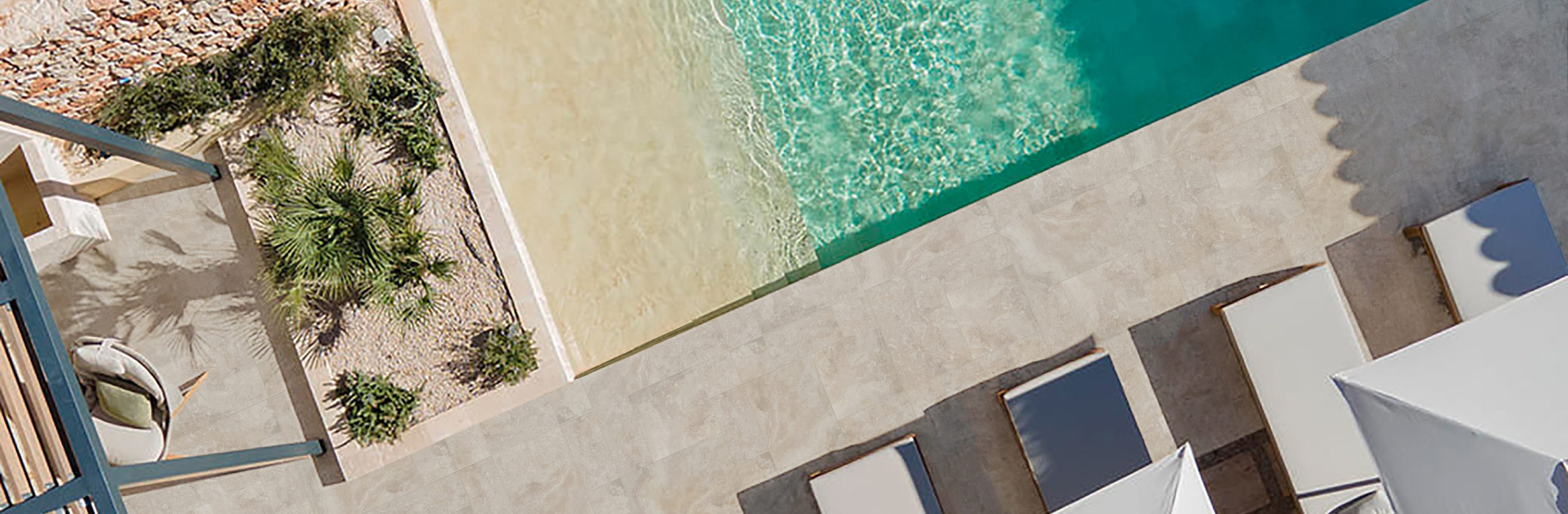
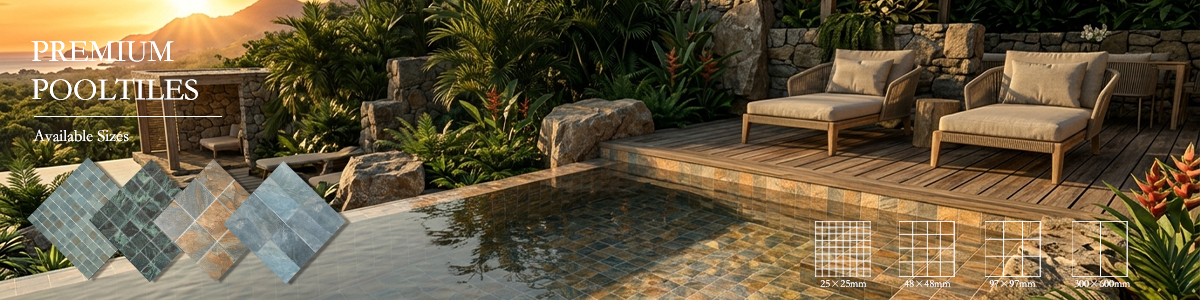
As can be seen from this case study, the pool floor and walls use small-format turquoise-green pool tiles. The fine pool tile mosaic texture allows the water surface to produce natural, richly varied refraction effects under sunlight. Compared to large-format, single-texture pool tiles, small-format pool tiles offer a more pronounced dynamic advantage. As water ripples flow, the angle, color variation, and texture of each individual pool tile participate in light reflection, creating underwater layers of varying depth and intensity. From a distance, the pool appears as a unified natural turquoise green; up close, you can feel the delicate and rich granular variation. This effect is closer to natural lakes, streams, or mineral water bodies, making it more suitable for projects that emphasize natural experience — mountain lodges, forest hotels, and hot spring resorts.
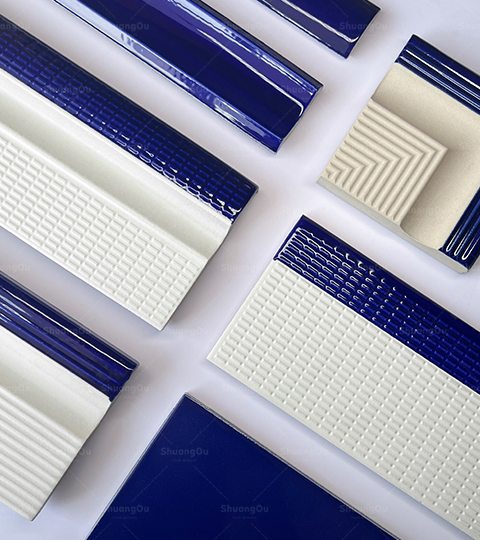
The value of small-format pool tiles is not merely about “richer visuals.” In professional water-space applications, one must also comprehensively consider the pool structure, corners, steps, curved surfaces, shallow areas, and different construction nodes. A well-planned pool tile format and accessory system allows pool tiles to better adapt to complex pool shapes while ensuring more seamless transitions between pool walls, floor, and edges. Shuangou Ceramics has long been deeply engaged in pool and landscape water-space materials, conducting continuous project-based research on product colors, format combinations, and actual installation effects. What we aim to provide designers and project owners is not just a specific product model, but a more complete approach to pool tile selection: What kind of pool suits small-format mosaics? How to shape water color through light-and-dark combinations? Should the pool floor and walls use the same material? How can edge trim reduce visual fragmentation? What material language is appropriate for mountain retreats, island resorts, and urban hotels respectively? What Shuangou does is transform pool tile selection from “going by feel” into a more logical water-space solution.
Wood Deck and Turquoise Water: A Natural Yet Warm Color Relationship
The pool is surrounded by warm-toned wood decking, forming a gentle warm-cool contrast with the turquoise-green water. The turquoise green expresses coolness, nature, and tranquility; the wood tones add warmth and a sense of living. Combined with white sun umbrellas, wooden loungers, outdoor furniture, and natural plants, the entire pool area does not feel overly commercialized — it feels more like a lifestyle courtyard growing naturally within the mountain forest. This is also an important trend in current lodge pool design: shifting from standalone pool design to complete outdoor living scene design. The poolside is no longer just a place to set out a few loungers — it needs to accommodate more ways of living: morning mountain views and breakfast; afternoon rest and reading; evening tea and scenery; nighttime socializing and relaxation. The pool thus becomes part of the lodge’s public space, and one of the areas where guests spend the most time and feel the strongest emotions.
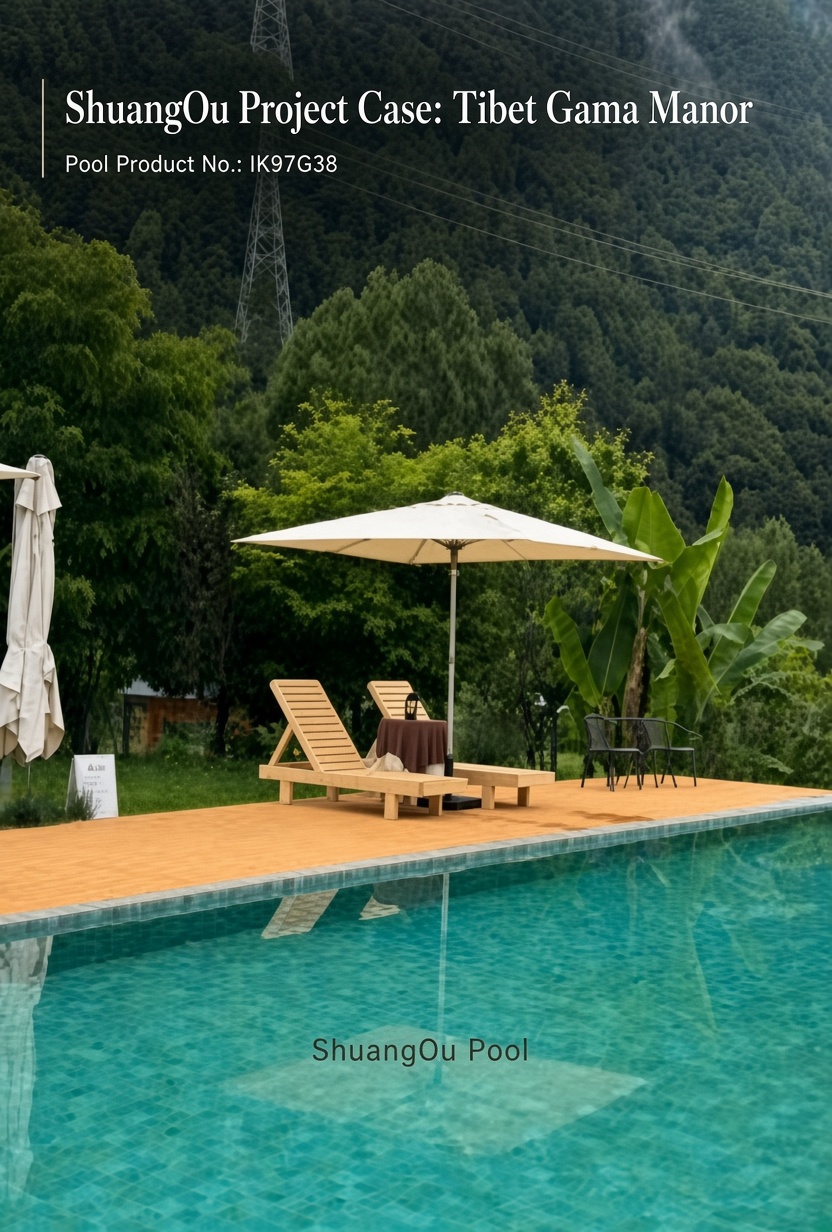
Shuangou Ceramics believes that pool tile coordination must not focus solely on the pool interior — it must also consider the exterior. Pool tiles, waterline tiles, poolside paving, wood decking, landscape stones, wall materials, and plant colors all need to form a unified relationship. Only by starting from the overall space can pool tiles truly serve the design, rather than existing independently from one another.
Borrowed-Scenery Design: Giving the Pool an Irreplaceable Sense of Place
The most moving part of this pool is not just the pool body itself — it is the relationship it forms with the distant snowy peaks, forest, and sky. The design does not enclose the pool with tall walls; instead, it preserves an open vista. The pool acts like a horizontally spread mirror, drawing the sky and mountain forest into the lodge courtyard. This design approach can be understood as a “borrowed-scenery pool.” What it emphasizes is not how elaborate the pool itself is, but whether the pool can amplify the site’s inherent natural value.
In the future, lodges and resort hotels will increasingly value the regional distinctiveness of their projects. Seaside pools should respond to the coastline, forest pools should integrate with vegetation and terrain, and mountain pools should leverage distant peaks, mist, and elevation changes. Spaces with genuine long-term value are not those that copy a popular style, but those that find the pool tile material expression unique to the project itself. Shuangou Ceramics has always followed global trends in hotels, lodges, and landscape water spaces, but we do not advocate mechanically replicating so-called “Instagram-famous pools.” The value of trends is to help designers understand change, not to make every project look the same. From island resorts and mountain lodges to urban hotels, Shuangou hopes to use different color systems, formats, and textures of pool tiles to find, for each project, a water-space language that better fits its regional environment and brand positioning.
Five Trends in Current and Future Pool Tile Selection
- First, from highly saturated blue pool tiles to natural water color pool tiles. Turquoise green, gray-blue, mineral green, and light sand color pool tiles that are closer to natural water bodies are being adopted by more and more projects. Pools no longer pursue excessive brightness, but emphasize that pool tiles harmonize with architecture, plants, and the environment.
- Second, from single function to compound lifestyle scenes. Pools will simultaneously serve leisure, socializing, scenery viewing, dining, and content-sharing functions. Pool tile selection must balance user experience with visual communication.
- Third, from decorative forms to pool tile material texture. Complex contours and exaggerated landscaping are decreasing; the design emphasis is gradually returning to water color, pool tile surface texture, edge details, and light-and-shadow variation.
- Fourth, from standardized replication to regional expression. Memorable pools of the future will not simply copy Balinese or Mediterranean styles, but will derive their pool tile selection rationale from local climate, vegetation, architecture, and natural landscapes.
- Fifth, from single-product procurement to systematic pool tile solutions. Designers and project owners need not just one pool tile, but systematic coordination among waterline tiles, pool walls, pool floor, corners, steps, poolside paving, and construction nodes. This also means the role of pool tile brands is changing. Brands should no longer simply supply pool tile products — they need the capability to understand design, assist with pool tile selection, coordinate with projects, and drive implementation.
Shuangou Ceramics: From Pool Tile Materials to Water-Space Expression
Shuangou Ceramics has long specialized in ceramic mosaics, pool tiles, and landscape water-space materials, continuously following design changes across hotels, lodges, private residences, hot springs, landscape pools, and other project types. Shuangou Ceramics does not wish to be merely a pool tile supplier in projects. We are more focused on: how pool tiles influence water color; how water color responds to architecture; how installation methods alter spatial scale; how different pool tile formats adapt to pool structures; and how design effects can be genuinely translated into buildable projects. To this end, Shuangou continuously distills insights from real case studies, spatial trends, and pool tile material applications, providing designers, landscape teams, hotel and lodge project owners, and engineering clients with clearer pool tile selection directions and coordination references.
From a single pool tile to a complete system of water-space color, texture, and implementation relationships, Shuangou Ceramics makes pool tiles no longer just products within the construction process, but an integral part of spatial design. A pool that truly leaves an impression never relies on water alone. It comes from the combined effect of environment, architecture, pool tiles, and people. Shuangou Ceramics — not just supplying pool tiles, but studying how pool tiles create water spaces. From material research to waterscape expression, bringing every scene to life.